What the Mahabharatha knew about wealth that nobody told you

Some links on this page may be affiliate links. If you purchase through them, we may earn a commission at no extra cost to you.
KEY TAKEAWAYS
  • Artha, one of the four Purusharthas, represents the material foundation necessary for a full life, providing security and freedom to pursue other aims like Dharma and Kama.
  • Karna's life illustrates the struggle of lacking legitimate Artha despite innate worth and ability, showing how social status and recognition shape one's identity and choices.
  • Receiving Artha as a gift or out of desperation can create obligations that bind a person, turning provision into debt rather than true security.
  • Karna's generosity, including giving away his divine armor, reflects both nobility and the deep wound of insecurity caused by his lack of stable Artha.
  • The Mahabharata teaches that Artha should be held lightly as a foundation, not as the ultimate measure of worth, highlighting the complex interplay between material needs and human dignity.
GLOSSARY
Artha
The material foundation of life in the Purusharthas framework, encompassing wealth, security, resources, and social position necessary for pursuing other life aims.
Purusharthas
The four aims of human life in Indian philosophy: Dharma (righteousness), Artha (material prosperity), Kama (pleasure), and Moksha (liberation).
Karna
A central character in the Mahabharata, born with divine armor and earrings, whose life exemplifies the challenges of lacking recognized Artha despite inherent worth.
Kavach and Kundal
Divine armor and earrings worn by Karna that made him invulnerable and symbolized his worth and protection.
Duryodhana
A prince in the Mahabharata who granted Karna a kingdom, providing him with Artha but also binding him in loyalty and obligation.
Danveer
A title meaning 'great giver,' used to describe Karna's renowned generosity despite his social and material struggles.
FAQ
What does Artha mean in the context of the Mahabharata?
Artha refers to the material foundation of life, including wealth, security, and social position. It is essential for enabling a person to pursue righteousness (Dharma) and pleasure (Kama), making it the ground upon which a full life is built.
Why is Karna's story significant in understanding Artha?
Karna's story highlights the struggle of having innate worth but lacking recognized Artha due to social circumstances. His life shows how the absence of legitimate material and social standing can shape identity, loyalty, and choices.
How does receiving Artha as a gift affect a person according to the article?
Receiving Artha as a gift, especially out of desperation, can create obligations and bind a person in loyalty, turning what should be provision into a form of debt. This limits freedom and complicates the relationship with material security.
What does Karna's act of giving away his armor symbolize?
Karna's generosity in giving away his divine armor symbolizes both his noble character and the deep insecurity caused by his lack of stable Artha. It reflects his need to prove worth through giving, even at great personal cost.
What lesson does the Mahabharata teach about the pursuit of Artha?
The Mahabharata teaches that Artha should be secured and held lightly as the foundation of life, not as the ultimate goal. It emphasizes the balance between material needs and other human aims, warning against letting Artha define one's worth.
EDITORIAL NOTE
This piece is part of The Present Minds — essays on psychology, identity, and modern life.

Posted

in

by

Comments

Leave a Reply

Your email address will not be published. Required fields are marked *

The Present Minds
By Navneet Shukla March 29, 2026 Purusharth

What the Mahabharatha knew about wealth that nobody told you

7 min read · 1,387 words
Tap to switch read mode. Original contrast is live.
Navneet Shukla
Written By Navneet Shukla Founder · Editor · Systems Architect

Navneet Shukla writes about how people think and how modern life shapes that thinking. The Present Minds is where he explores it.

What is the meaning of Artha? Often reduced to mere wealth, it was understood by our ancestors as the vital ground that sustains a full human life.

Karna’s story in the Mahabharata reveals the fragile, contested nature of this foundation-one that shapes identity, loyalty, and destiny. He was born with armour fused to his skin.

Not metaphorically. Karna enters the Mahabharata wearing a divine kavach, a golden breastplate that made him invulnerable. He did not earn it. He did not ask for it. It came with him the way certain things come to certain people at birth, before they have done anything to deserve or lose them.

He also wore radiant earrings. Kundal that caught the light.

Together they were not just protection. They were visible, undeniable proof of his worth.

And yet Karna spent his entire life trying to prove something the armour should have already settled.

Born to Everything. Given Nothing.

His mother was Kunti. His father was Surya, the sun god. By blood, he was a prince.

She placed him in a basket on a river and let him go.

He was found by a charioteer named Adhiratha and raised as a sutaputra. A charioteer’s son. Low caste. Ineligible, by the rules of his world, for the life his blood was supposed to guarantee.

This is where the Mahabharata begins its long examination of Artha.

Artha is the second of the four Purusharthas. The four aims of human life that together constitute a complete existence. It is translated, usually, as wealth. But the tradition was more careful than that translation allows.

Artha is the material foundation of a full life. Security. Resources. A position in the world that gives you the freedom to act. The Arthashastra, the ancient Indian treatise on statecraft, described it as the source from which Dharma and Kama flow. Without Artha, the other aims remain theoretical. A person fighting for basic survival cannot practice righteousness. Cannot experience deep pleasure. Cannot contemplate liberation.

Artha is not the destination. It is the ground beneath your feet.

Karna had none of it. Not because he lacked ability. Every account in the Mahabharata describes the same thing. A warrior of extraordinary gift. A man of almost inconceivable generosity. Someone whose character was so complete that even his enemies admitted it.

He had everything.

Except a name the world would accept.
The Tournament

He went to Hastinapura to compete.

He had trained. He demonstrated his skill on the field and surpassed what the princes had done. The crowd saw it. For one moment, the life that should have been his was within reach.

Then Kripa stopped him.

What is your lineage? What kingdom are you from? This tournament is for princes. A sutaputra cannot compete here.

Duryodhana stepped forward. He saw what was happening. He saw the humiliation being arranged for a man whose only crime was his birth. And he gave Karna the kingdom of Anga, on the spot, out of his own holdings, so that Karna could stand as a king among kings.

The gift was real. The friendship was real.

Karna spent the rest of his life loyal to Duryodhana with a fidelity so total and so costly that it consumed him.

This is the trap the Mahabharata is setting. Read it carefully.

Duryodhana gave Karna Artha. Position. A kingdom. The material legitimacy the world had denied him. And Karna, who had been starved of it, received it with everything he had. His identity reorganised around it. His loyalty to the giver became absolute.

But the Artha Duryodhana gave was not free. It came wrapped in obligation. In a war Karna had not chosen. In an allegiance he could never put down without returning to the boy on the river.

Artha received in desperation is not Artha. It is debt wearing the face of provision.
what is the meaning of artha?

The Armour He Gave Away

Indra came to him disguised as a Brahmin.

He came in disguise because he knew Karna would not refuse a request from a Brahmin. Karna was famous for it. Danveer Karna. The great giver. The man who would not turn anyone away empty-handed. It was the one thing in his life that belonged to him completely. Beyond the reach of caste. Beyond the cruelties of his birth. His generosity was the one door the world had not managed to close.

Indra asked for the kavach and kundal.

Karna knew it was Indra. He knew the armour was being taken to protect Arjuna, his rival, his half-brother he did not yet know was his half-brother. He knew giving it away meant giving away his invulnerability. He understood what it would cost.

He gave it anyway.

The commentators have argued about this moment for centuries. Was it nobility or was it recklessness? Was it Dharma or a kind of quiet suicide? Was Karna’s generosity the fullest expression of his character or was it the final proof of his wound?

Both things can be true.

Karna’s generosity was real. It was also a symptom.

A man who is secure in his Artha does not need to keep proving it. He can say no. He can hold something back. He can see through a question that is designed to take the last thing he has.

Karna could not. Because the armour was never really about protection. It was about being seen. About carrying something that could not be questioned or denied by a world that had already decided his birth made him less.

When he gave it away he was not giving away metal.

He was giving away the last undeniable proof that he mattered.

A person who pursues Artha to settle the question of their worth will never have enough. Worth is not a material problem.
What the Mahabharata Is Actually Teaching

The Purusharthas framework does not condemn the pursuit of Artha. A philosophy that dismisses material need would be a luxury available only to those who already have everything. The text knows this. Artha is one of the four aims for a reason.

What the framework insists on is the relationship between them.

Artha is the ground, not the destination. It is meant to be secured and then held lightly. As foundation. As the condition that makes a full life possible. Not as the measure of the life itself.

Karna’s tragedy is not that he wanted recognition. It is that he could never hold what he received lightly enough to be free of it. Every gift of position was also a chain. He could not leave Duryodhana because leaving meant becoming the abandoned boy again. He could not refuse Indra because refusing meant admitting he needed the armour more than he needed to be the man who gives everything away.

He died on a battlefield, his chariot wheel stuck in the mud, killed by an arrow from the brother he never got to know, fighting for a cause he understood was wrong, loyal to the end to the man who had once given him his name.

His birth had promised him everything.

The world’s refusal of that promise shaped every single choice he ever made.

And still, when Kunti came to him before the war and asked him not to fight her other sons, he told her she would still have five sons when it was over. He knew what he was agreeing to. He agreed anyway.

This is not the behaviour of a defeated man.

This is the behaviour of a man who finally understood what he had always been chasing, and chose to give it up freely, having never been given the choice before.
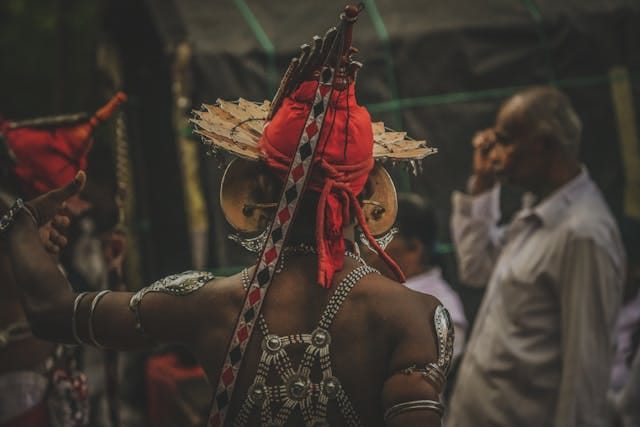
What is the meaning of artha: takeaways

The Mahabharata does not tell you what to think about Karna. It simply shows you a life in which Artha was the central question, every answer was incomplete, and the man who lived it was more fully human for the incompleteness than any character who got it right.

Artha is the ground.

Karna never got to stand on it.

That is the whole lesson. And it is enough.


This piece is part of the Purushartha series on The Present Minds. Read the pillar: What Is Dharma? What the Mahabharata Knew About Losing Everything


Why life breaks when everything becomes a goal

What I learnt from my kurdish barber in london

Navneet Shukla
Written By

Navneet Shukla

Founder · Editor · Systems Architect

Navneet Shukla writes about how people think and how modern life shapes that thinking. The Present Minds is where he explores it.

Key Takeaways
  • Artha, one of the four Purusharthas, represents the material foundation necessary for a full life, providing security and freedom to pursue other aims like Dharma and Kama.
  • Karna's life illustrates the struggle of lacking legitimate Artha despite innate worth and ability, showing how social status and recognition shape one's identity and choices.
  • Receiving Artha as a gift or out of desperation can create obligations that bind a person, turning provision into debt rather than true security.
  • Karna's generosity, including giving away his divine armor, reflects both nobility and the deep wound of insecurity caused by his lack of stable Artha.
  • The Mahabharata teaches that Artha should be held lightly as a foundation, not as the ultimate measure of worth, highlighting the complex interplay between material needs and human dignity.
Glossary
Artha
The material foundation of life in the Purusharthas framework, encompassing wealth, security, resources, and social position necessary for pursuing other life aims.
Purusharthas
The four aims of human life in Indian philosophy: Dharma (righteousness), Artha (material prosperity), Kama (pleasure), and Moksha (liberation).
Karna
A central character in the Mahabharata, born with divine armor and earrings, whose life exemplifies the challenges of lacking recognized Artha despite inherent worth.
Kavach and Kundal
Divine armor and earrings worn by Karna that made him invulnerable and symbolized his worth and protection.
Duryodhana
A prince in the Mahabharata who granted Karna a kingdom, providing him with Artha but also binding him in loyalty and obligation.
Danveer
A title meaning 'great giver,' used to describe Karna's renowned generosity despite his social and material struggles.
FAQ
What does Artha mean in the context of the Mahabharata?
Artha refers to the material foundation of life, including wealth, security, and social position. It is essential for enabling a person to pursue righteousness (Dharma) and pleasure (Kama), making it the ground upon which a full life is built.
Why is Karna's story significant in understanding Artha?
Karna's story highlights the struggle of having innate worth but lacking recognized Artha due to social circumstances. His life shows how the absence of legitimate material and social standing can shape identity, loyalty, and choices.
How does receiving Artha as a gift affect a person according to the article?
Receiving Artha as a gift, especially out of desperation, can create obligations and bind a person in loyalty, turning what should be provision into a form of debt. This limits freedom and complicates the relationship with material security.
What does Karna's act of giving away his armor symbolize?
Karna's generosity in giving away his divine armor symbolizes both his noble character and the deep insecurity caused by his lack of stable Artha. It reflects his need to prove worth through giving, even at great personal cost.
What lesson does the Mahabharata teach about the pursuit of Artha?
The Mahabharata teaches that Artha should be secured and held lightly as the foundation of life, not as the ultimate goal. It emphasizes the balance between material needs and other human aims, warning against letting Artha define one's worth.
Editorial Note

This piece is part of The Present Minds, essays on psychology, identity, and modern life.

Discussion
No comments yet. Be the first.