
Can you smell fear?
Imagine walking into a room just before someone has to give a speech.
Nobody says anything. Everyone is sitting normally. But the room somehow feels tense.
We usually explain that through faces, posture or tone of voice. Someone is tapping a foot. Someone looks pale. Nobody is quite relaxed.
But there is another possibility that sounds much stranger.
You may be picking up something in the air.
Not “fear” as a recognisable smell, like coffee or petrol. The idea scientists have been testing is subtler: when people are frightened or anxious, their sweat changes, and those chemical changes may affect other people without them consciously knowing why.
That sounds like folklore.
It is not quite.

What Scientists Mean by “Smelling Fear”
Humans sweat for several reasons.
Heat is one. Exercise is another. Stress and fear can also trigger sweating.
Researchers can collect that sweat on absorbent pads and compare samples produced in different emotional states.
In one common setup, volunteers watch frightening films while their sweat is collected. On another day, sweat is collected while they are relaxed or exercising. Other people then smell the samples without being told which is which.
The surprising bit is that the second group often does not consciously say, “That smells frightened.”
Instead, their bodies or behaviour change.
A 2017 meta-analysis combined 26 studies involving 1,652 people. Across them, body odour collected during fear, stress or anxiety had a small-to-moderate effect on the people exposed to it.
So when we ask can you smell fear, there is evidence for something real here.
Just not the superpower Hollywood gave us.

Can You Smell Fear Without Knowing It?
This is where it gets interesting.
In an early experiment, researchers collected sweat from students just before an oral exam and compared it with sweat produced during exercise.
Most people exposed to the samples could not reliably identify the anxious sweat.
Their bodies reacted anyway.
The anxiety sweat increased the participants’ startle response.
Other experiments have found changes in facial muscles, visual scanning and the way people interpret ambiguous faces. One double-blind study found that fear-related body odour pushed people toward a more fearful response pattern.
That is the important distinction.
You may not smell fear in the ordinary sense of noticing an odour and recognising what it means.
But your nervous system may still respond to information carried in another person’s body odour.
Your nose may have noticed something before you did.

Fear May Put Other People on Alert
Why would that happen?
The simplest explanation is that fear is useful information.
Imagine somebody near you notices danger before you do.
If something about their frightened state makes your own body slightly more alert, that could be useful before anyone has even had time to shout.
Some experiments fit that idea.
A 2006 study found that people exposed to fear-related sweat performed certain tasks more cautiously and accurately. A later review argued that these chemical signals may help prepare people to detect possible danger.
It is not a detailed message.
More like:
Pay attention. Something may be wrong.
That is a much more interesting answer to can you smell fear than simply saying frightened people smell different.
Their body odour may alter what your body does next.

There Is No Single “Fear Molecule”
This is where the thriller version starts falling apart.
Scientists have not discovered one chemical called fear.
Human body odour is complicated. Diet, genetics, age, health, hygiene and even the bacteria living on our skin can change it.
Researchers are still trying to work out which chemicals matter.
A 2025 study compared anxiety sweat with neutral sweat and found several chemical differences. More interestingly, people exposed to the anxiety samples became more sensitive to one test smell, although not another.
That suggests anxiety-related body odour may do more than make another person uneasy.
It might make them pay slightly closer attention to their surroundings.
But this field is not finished.
A 2023 paper failed to reproduce some earlier findings involving emotional-face recognition. And the 2017 meta-analysis itself noted that it did not assess the internal validity of every study it combined.
So there is evidence for the broad effect.
The exact mechanism is still being worked out.
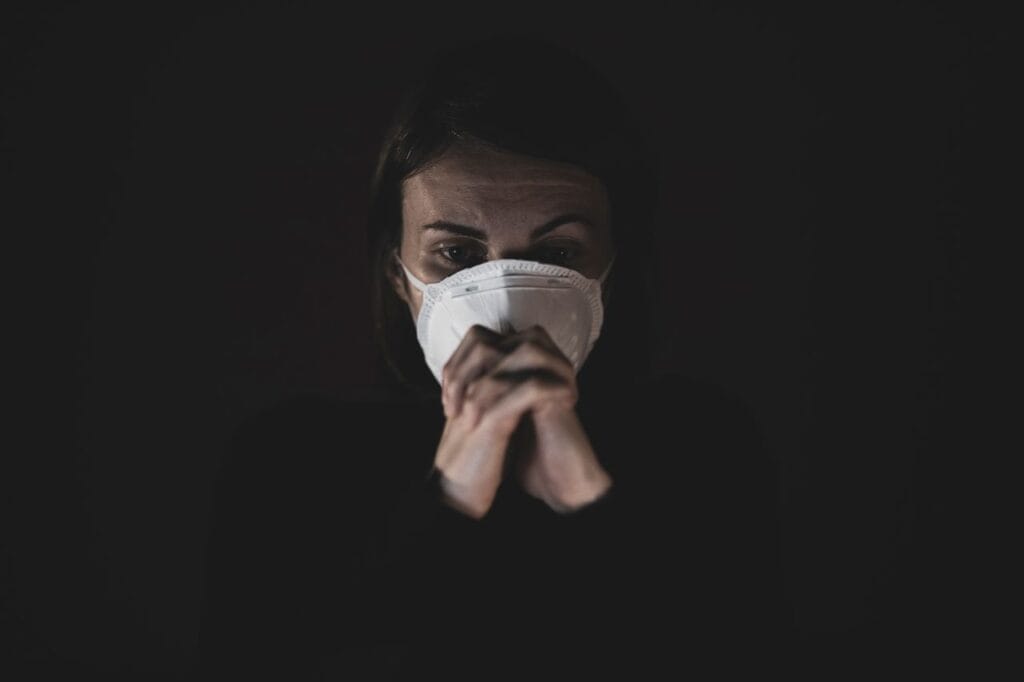
No, This Does Not Mean You Can Smell a Liar
This is probably the most useful thing to remember.
If somebody looks nervous in a meeting, you cannot lean closer, take a sniff and decide they are hiding something.
Fear is not guilt.
Anxiety is not dishonesty.
And the research does not show that humans can reliably identify frightened people simply by smelling them.
That matters because can you smell fear is very different from can you detect who is afraid.
The first may involve subtle biological signals.
The second would require consciously interpreting those signals correctly.
We do not appear to be very good at that.
So, Can You Smell Fear?
In the Hollywood sense, probably not.
There is no good evidence that humans can walk into a room, consciously recognise a special fear scent and point to the frightened person.
But in the biological sense, the answer may be partly yes.
Across dozens of experiments, sweat produced during fear, stress and anxiety has influenced other people’s attention, facial responses, startle reactions and perception. The overall effect in the 2017 meta-analysis was statistically detectable, although some individual findings remain uncertain.
Which leaves us with something much stranger than the old phrase.
The next time someone says they could “feel the tension in the room,” they are probably noticing faces, silence, posture and all the other things humans read without thinking.
But perhaps not only those things.
Some of the tension may literally have been in the air.
Read Next: Your Dog May Be Fighting with Itself When You Say No
People Are Seeing Ads in Their Dreams.
Your Brain Does Not Know Where You End. It Is Always Guessing.

 Psychology · Oct 9, 2026The Problem With Always Being Nice
 Psychology · Oct 7, 2026Some People Aren’t Bad at Texting. They Just Don’t Want to Talk to You.
 Psychology · Oct 3, 2026Do Opposites Actually Attract?