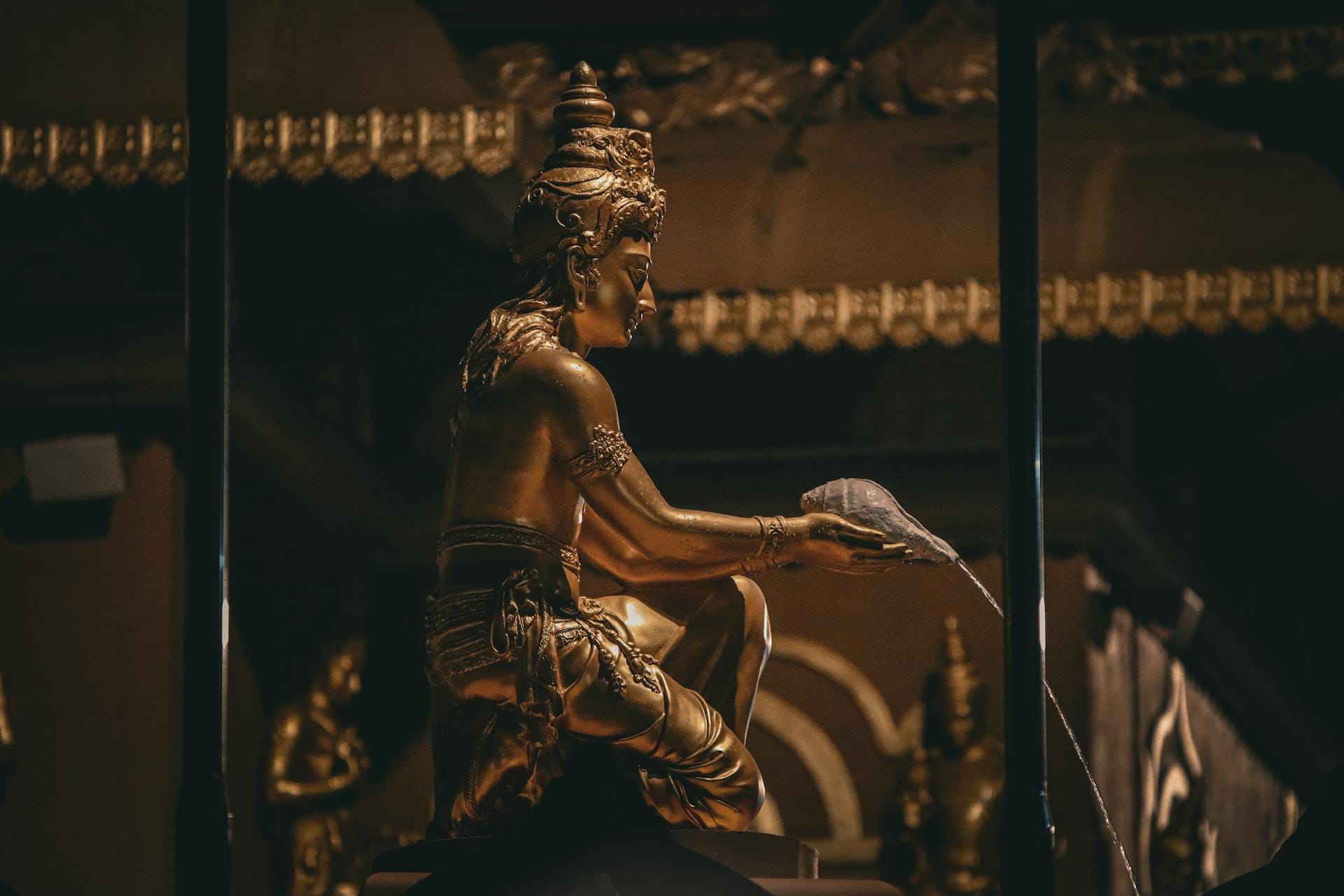
What is Dharma? It is the question the Mahabharata spends eighteen books answering and never quite resolves. That is not a failure of the text. That is the point.
The oldest stories we have are not about winning. They are about what a person does when the ground gives way. When the thing they built is taken. When the life they were promised turns out to have been a story someone else was telling. The Mahabharata is the longest poem in human history and it is, at its core, about a man who gambled everything on a single throw of dice and lost.
His name was Yudhishthira. He was the eldest of the Pandava brothers. He was considered the most righteous man alive.
He lost his kingdom. He lost his palace. He lost his brothers. He wagered his wife, Draupadi, and lost her too. He stood in a crowded hall and watched everything that defined his life stripped away, piece by piece, while the men who took it laughed.
And then, because the story was not finished with him, he had to figure out what remained.
The dice do not lie. They only reveal what was always true about the one who throws them.
The Four Aims and the Order We Get Them Wrong
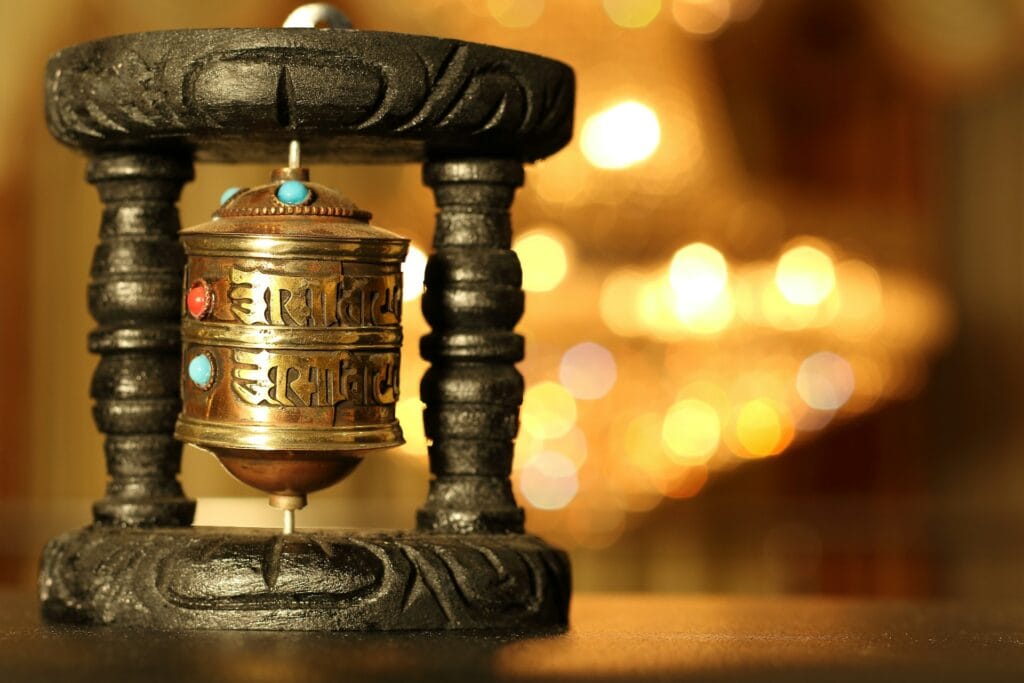
The Purusharthas are the four aims of a human life as described in the ancient Indian philosophical tradition. Dharma, Artha, Kama, Moksha. Righteousness, prosperity, desire, liberation. They are not a checklist. They are not a sequence. They are a map of everything a human life reaches toward, held in relationship to each other, each one incomplete without the others.
Most people encounter them in the wrong order.
We begin with Artha. With building. With the accumulation of the things that make a life look stable from the outside: money, position, reputation, the house, the title, the relationship that photographs well.
This is not wrong. Artha is a genuine aim. The tradition does not pretend that material wellbeing is beneath consideration. It names it as one of the four pillars of a complete life.
We spend time in Kama too, though we rarely call it that. Kama is desire in the fullest sense of the word, not merely physical wanting but the whole range of human longing: for beauty, for pleasure, for connection, for the moments when life feels saturated with its own presence.
Kama is the taste of a meal after a long hunger. The particular quality of afternoon light through a window you have looked through a thousand times. The feeling of being known by someone who has had every reason to leave.
And then something breaks.
For Yudhishthira it was the dice. For most people it is quieter than that. A redundancy. A diagnosis. A relationship that ends not with a single catastrophic event but with the slow realisation that something you had been calling love had already left the room.
A decade of work that turns out to have been building the wrong thing. The morning you wake up and the life you assembled is all still there and none of it feels like yours.
When Artha fails and Kama goes hollow, the question that remains is the one the Mahabharata was written to ask.
What is Dharma? What is it that holds when everything else has been taken?
A man who has never lost anything does not yet know who he is. He knows only what he has.

The Hall of the Dice
It is worth sitting with what actually happened in that hall.
Yudhishthira was not a reckless man. He was not vain or cruel or drunk on his own power. He was considered the wisest of the Pandavas, the one most committed to righteousness, the one whose judgment the others trusted.
He knew that his cousin Duryodhana’s invitation to play dice was not made in good faith. He knew, at some level, that the game was designed to be lost.
He played anyway.
The scholars and commentators have spent centuries arguing about why. Some say it was pride. Some say it was the Kshatriya code that made it impossible for a warrior king to refuse a challenge without dishonour.
Some say it was fate, that the story of the Mahabharata could not begin until everything had been lost, and Yudhishthira was the instrument through which that loss arrived.
What the text itself suggests is something more uncomfortable. Yudhishthira played because he wanted to believe that this time the world would reward the righteous man. That his Dharma would protect him. That the universe kept accounts and he was owed.
This is the belief that most of us carry quietly into every significant loss. That if we have been good enough, careful enough, diligent enough, the things we love will be kept safe. That the ground is solid under the people who deserve solid ground.
The Mahabharata does not agree. The dice fell the way they fell. The righteous man lost everything in a single afternoon.
And then he had to decide what righteousness meant now.
The ground is not promised to anyone. What is promised is the capacity to stand.

What Dharma Is Not
Before understanding what Dharma is, it helps to clear away what it is not.
It is not a reward system. The man who acts rightly is not guaranteed a good outcome. The Mahabharata is insistent on this to the point of brutality. Yudhishthira lives with absolute integrity and loses everything.
Karna, whose life is one long accumulation of injustices, maintains his dignity until the very end and is killed in circumstances that violate every code of honourable combat. The text does not explain this away. It holds it.
Dharma is not the same as following rules. Yudhishthira himself eventually comes to understand this. There are moments in the Mahabharata where adherence to the letter of a code produces an outcome so clearly wrong that the code must be set aside.
Where what is technically permitted is obviously not what ought to be done. Where the rule and the principle have come apart, and you have to choose which one to follow.
Dharma is not fixed. One of the most striking features of the Mahabharata’s treatment of Dharma is how consistently the text refuses to give a simple definition. When asked directly, the great teacher Bhishma says: Dharma is subtle.
Even the gods are sometimes confused by it. This is not evasion. It is precision. Dharma is context-dependent, relational, alive. What is right for one person in one situation is not necessarily right for another person in the same situation.
And Dharma is not the same as what you feel like doing. The Sanskrit word includes duty, righteousness, natural law, and the specific obligations that arise from who you are and the roles you inhabit. It is demanding in a way that goes beyond preference.
What it is, is the thing that remains when everything else is stripped away.
When a man has lost his kingdom, he discovers what he was king of all along.

The Forest
After the hall of dice, Yudhishthira and his brothers were exiled to the forest for twelve years, followed by a year in disguise. Thirty-six seasons in the wilderness before they were permitted to return.
The forest years in the Mahabharata are not presented as punishment alone. They are where the education happens. Where the brothers encounter sages, face tests, lose more than they thought they had left to lose, and begin to understand something about what they were before the kingdom and what they will be after it.
It is in the forest that Yudhishthira encounters the Yaksha, a spirit who guards a lake and poses questions to each of the brothers before allowing them to drink. One by one the brothers approach and answer incorrectly, falling unconscious. Yudhishthira, the last, sits and listens to the questions.
What is heavier than the earth? A mother. What is higher than the sky? A father. What is swifter than the wind? The mind. What is the most numerous thing? Grief. What is the greatest wonder? Every day, men see others dying and think it will not happen to them.
The Yaksha asks finally: What is the path? And Yudhishthira answers: Argument leads to no certain conclusion. The scriptures are contradicted by other scriptures. There is not one sage whose opinion is the final authority. The truth of Dharma is hidden. The only path is the one taken by great persons.
Not the rules. Not the argument. Not the authority. The example. The life lived in a particular way, in particular circumstances, by a person who was paying attention.
There is no instruction for the moment after everything has been lost. There is only the quality of attention you bring to what is left.
What the Purusharthas Say About Catastrophe
The four aims are usually taught as a framework for flourishing. How to build a full life. How to balance material success with desire, desire with righteousness, righteousness with the deep practice of liberation.
What is less often said is that they are also a map for what to do when the building has collapsed.
When Artha is gone, when the prosperity and position that structured your days have been removed, the question becomes: what was I before that, and what am I still? Artha is real and its loss is real. The tradition does not ask you to pretend otherwise.
But it was never meant to be the whole of what you were. The man who loses his kingdom is not destroyed unless he had made the kingdom the entirety of himself.
When Kama goes hollow, when the desires that once animated daily life have lost their pull, when pleasure has stopped arriving in the places it used to arrive, what remains is the question of whether there is something in you that does not depend on the quality of the moment.
The Mahabharata knows this exhaustion. It is not presented as a moral failure. It is presented as a passage.
Dharma is what you are asked to return to when the others have been stripped away. Not as compensation. Not as the consolation prize for losing. But as the ground that was always there beneath the structures you built on top of it.
And Moksha, the fourth aim, the one most often translated as liberation, is not something you arrive at after everything is resolved. Yudhishthira does not achieve liberation at the end of the war, after the battle has been won and the kingdom restored.
He achieves it, the text suggests, somewhere in the forest. In the questions asked by a spirit beside a lake. In the moment he stopped arguing with the shape of his life and began simply living it.
Liberation is not the end of the story. It is the moment you stop needing the story to end differently.
What Remains
The Mahabharata ends in a way that refuses comfort. The war is won at a cost that makes winning feel indistinguishable from loss. The Pandavas restore their kingdom and rule it and then, in old age, leave it.
They walk into the mountains toward death, one by one falling on the path, until only Yudhishthira remains, accompanied by a dog.
He is offered entry to heaven. He refuses unless the dog can come with him. He is told the dog is not permitted. He refuses anyway. And then it is revealed that the dog was Dharma itself, in disguise, testing him one final time.
The test was not whether he could recite the rules. It was not whether he had accumulated sufficient merit. It was whether, at the very end, stripped of everything, he would still choose the thing that was right over the thing that was offered.
He would. He did.
What is Dharma? It is the question that has no final answer and the practice that has one. It is not what you believe when the ground is solid. It is what you do when the dice have fallen and the hall has gone quiet and everything you built is on the other side of the table.
It is who you still are, then.
That is all it has ever been.
Read next: What is Moksha: why liberation is the aim nobody talks about

 Psychology · Oct 17, 2026A Monkey Bite Killed the King of Greece
 Psychology · Oct 15, 202615 Surprising Facts That Sound Completely Made Up
 The Margin · Oct 13, 202615 Geography Facts That Sound Completely Made Up