
Synaptic pruning begins with a question philosophers have argued about for centuries.
Are we born as blank slates?
John Locke said yes. The mind begins empty. Experience fills it.
This idea shaped how Western thought understood learning and human potential for three hundred years.
A study published in Nature Communications in May 2026 says the brain disagrees.
What the ISTA researchers found
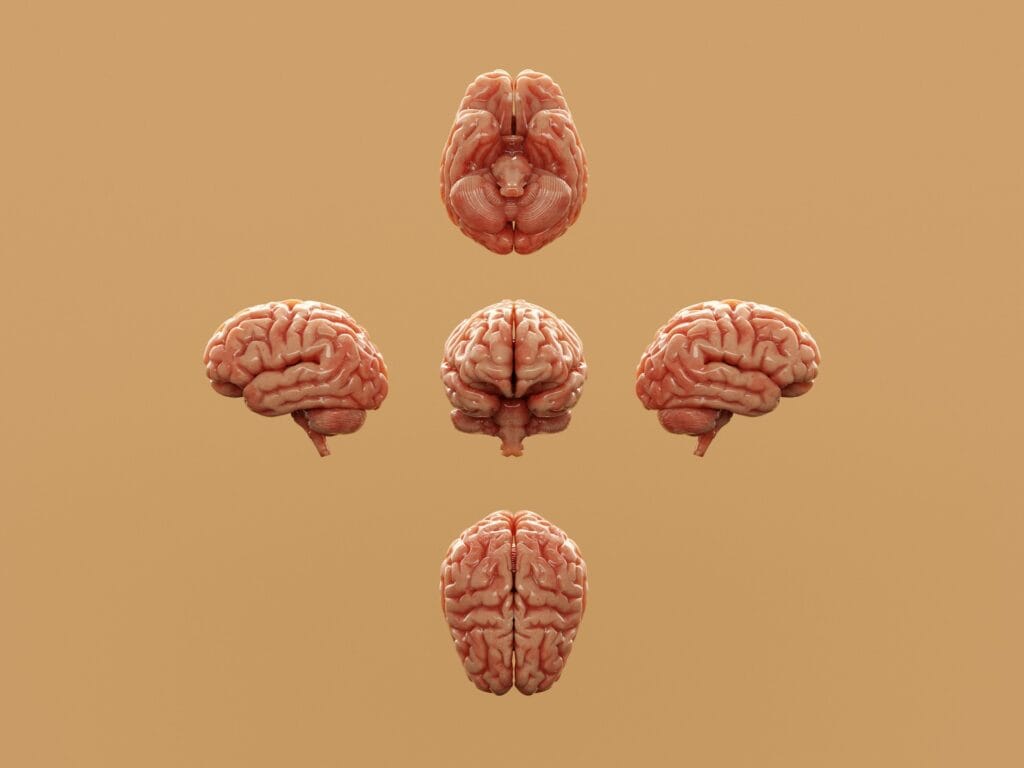
Scientists at the Institute of Science and Technology Austria studied the hippocampus, the brain region responsible for memory and spatial awareness.
They focused on CA3 pyramidal neurons, the cells critical for storing and retrieving memories, and mapped how neural connections changed across three developmental stages: early after birth, adolescence, and adulthood.
The finding was not what anyone expected.
“Intuitively, one might expect that a network grows and becomes denser over time,” said lead researcher Peter Jonas. “Here, we see the opposite. It starts out full, and then it becomes streamlined and optimized.”
The brain does not begin empty and fill up.
It begins overloaded and cuts down.
Synaptic pruning is not the brain losing something. It is the brain getting precise.
What a synapse actually is
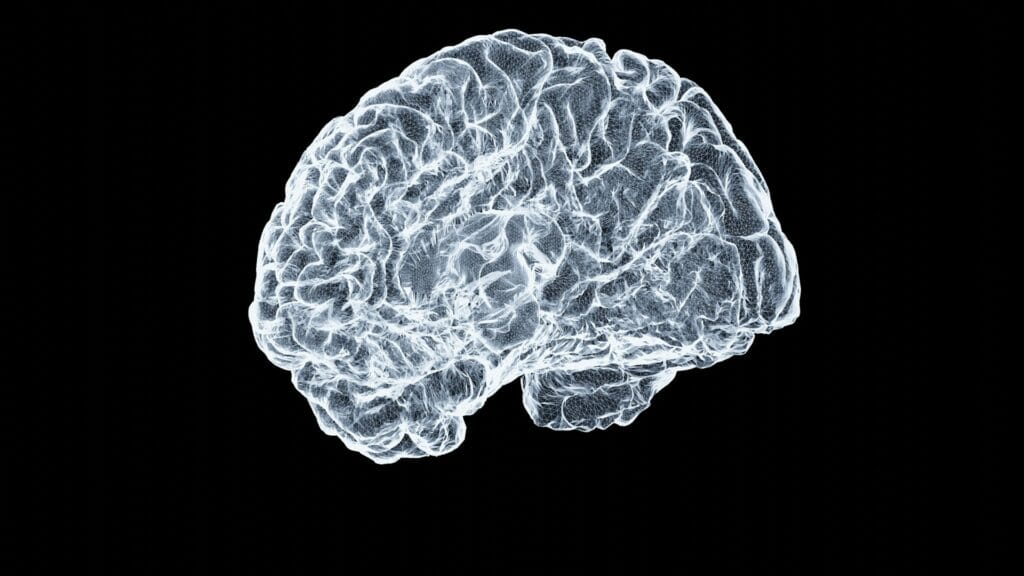
A synapse is the connection point between two neurons.
Synaptic pruning is the process where the brain removes weak or unused connections. Pathways used frequently get stronger. Those that are not used fade away.
Think of it as editing rather than construction.
A first draft is messy. Too many words, too many connections between things that do not need to be connected. The final version is cleaner not because more was added but because most of it was cut.
Only about half the neurons generated during development survive to function in an adult. Entire populations are removed through programmed cell death if they fail to receive enough life-sustaining chemical signals.
Half the neurons you were born with are gone by adulthood.
The ones that survived earned it.

Why the brain starts dense
If the brain ends up pruned, why begin overloaded?
Jonas suggests that beginning with a highly connected network allows neurons to link up quickly. The hippocampus must combine different types of information, sights, sounds, smells, into cohesive memories. An initially exuberant connectivity, followed by selective pruning, might be exactly what enables this integration.
The early density is not waste. It is optionality.
The brain arrives with more connections than it needs so it can figure out, through experience, which ones are worth keeping. Every repeated skill strengthens a pathway. Every ignored experience weakens one.
The pruning follows the pattern of your actual life.
The brain does not decide in advance what matters. It pays attention to what you do, then cuts everything else.

When pruning goes wrong
Synaptic pruning is most active during two periods. Early childhood and adolescence.
With too many synapses, neural networks become noisy and inefficient. Brain regions may be hyperconnected, but not in a way that improves function.
When pruning does not proceed normally, the consequences are measurable.
In autism spectrum disorder, mutations in genes tied to synaptic pruning can interfere with the removal process. Because more connections remain active, information travels along multiple routes simultaneously. This may explain why many autistic people experience several streams of thought at once.
In schizophrenia the opposite occurs.
Excessive pruning removes connections that should have been kept. Research published in Nature Neuroscience was the first to directly observe this excessive synaptic pruning using cells from patients with schizophrenia.
Too little pruning. Too much pruning. Both create difficulties.
The healthy brain is one that cuts precisely.

What this changes about learning
If the brain develops by subtraction rather than addition, then learning is not about maximising input.
It is about selective reinforcement.
Repetition matters not because it adds something but because it tells the brain what to keep. Every time you practise a skill you are voting for that connection to survive the next round of pruning.
Every skill you never use is a candidate for removal.
This reframes what forgetting actually is. Not failure. Not age. The brain clearing connections that experience has marked as unnecessary.
The brain that serves you best is not the one that remembers everything. It is the one that has learned what to discard.
This connects directly to Solomon Shereshevsky, the man who could not forget anything. His brain appeared unable to prune effectively. Every connection stayed active. The result was not superior memory. It was an inability to think clearly through the noise.
The ISTA study does not mention him. But it describes exactly his problem.

What the blank slate got wrong
Tabula rasa was always more philosophy than biology.
The brain does not wait for experience to begin. It arrives already wired, already connecting, already becoming what it will eventually be.
Experience does not write on a blank page. It selects from an already crowded one.
The findings suggest that the brain begins not as a blank slate but as a richly connected network that becomes more precise over time by trimming away unnecessary links.
The blank slate was a comforting idea. Pure potential. Infinite possibility.
The full slate is more interesting.
It implies the brain arrives with everything it might ever need, and spends a lifetime figuring out what to let go of.
That is a harder kind of development.
And a more honest one.
Read Next: Solomon Shereshevsky: The Man Who Could Not Forget Anything
The Man Who Owns the Moon. He Has Been Selling It Since 1980.

 Psychology · Oct 17, 2026A Monkey Bite Killed the King of Greece
 Psychology · Oct 15, 202615 Surprising Facts That Sound Completely Made Up
 The Margin · Oct 13, 202615 Geography Facts That Sound Completely Made Up