
The phrase is deceptive empathy.
It is not from a novel. It is a formal category of ethical violation, assigned by licensed clinical psychologists, in a peer-reviewed study published in 2026.
The definition: using phrases like “I see you” and “I understand” to create the appearance of emotional connection without any genuine understanding behind it.
A human therapist who did this consistently would face a licensing board. Their client could sue. They could lose the right to practise.
When ChatGPT as therapist does it, to millions of people every day, we call it a feature.

What the Brown University Study Actually Tested
Researchers at Brown University wanted to understand what happens when people use AI chatbots as therapists.
Not in theory. In practice.
They took seven peer counselors, all trained in cognitive behavioural therapy, and had them conduct self-counselling sessions with AI models prompted to act as CBT therapists.
The models tested were GPT, Claude, and Llama.
Three licensed clinical psychologists then reviewed the transcripts and flagged ethical violations against standards set by the American Psychological Association.
What they found was not a few edge cases.
It was a pattern.

The 15 Violations and What They Mean
The study identified 15 distinct ethical risks, grouped into five categories.
The first was lack of contextual adaptation. The chatbots consistently ignored a person’s specific background, history, and lived experience. They offered generic responses where a trained therapist would have listened first.
The second was poor therapeutic collaboration. The AI dominated conversations. It occasionally reinforced a user’s false or harmful beliefs rather than challenging them carefully.
The third was deceptive empathy. The one that licensed psychologists flagged most clearly. Warmth deployed as a pattern. Not as a response to anything real.
The fourth was unfair discrimination. The chatbots exhibited gender, cultural, and religious bias in their responses.
The fifth was the most serious: lack of safety and crisis management.
When users raised suicide ideation or acute distress, the chatbots mishandled it. Some denied service. Some responded indifferently. Some failed to refer users to appropriate resources.
The ChatGPT as Therapist Problem Nobody Designed For
The researchers are careful about something important.
These AI systems were not built to be therapists.
Nobody at OpenAI or Anthropic or Meta released a product and called it a clinical mental health tool. The systems were designed as general-purpose language models.
What happened is that people started using them that way anyway.
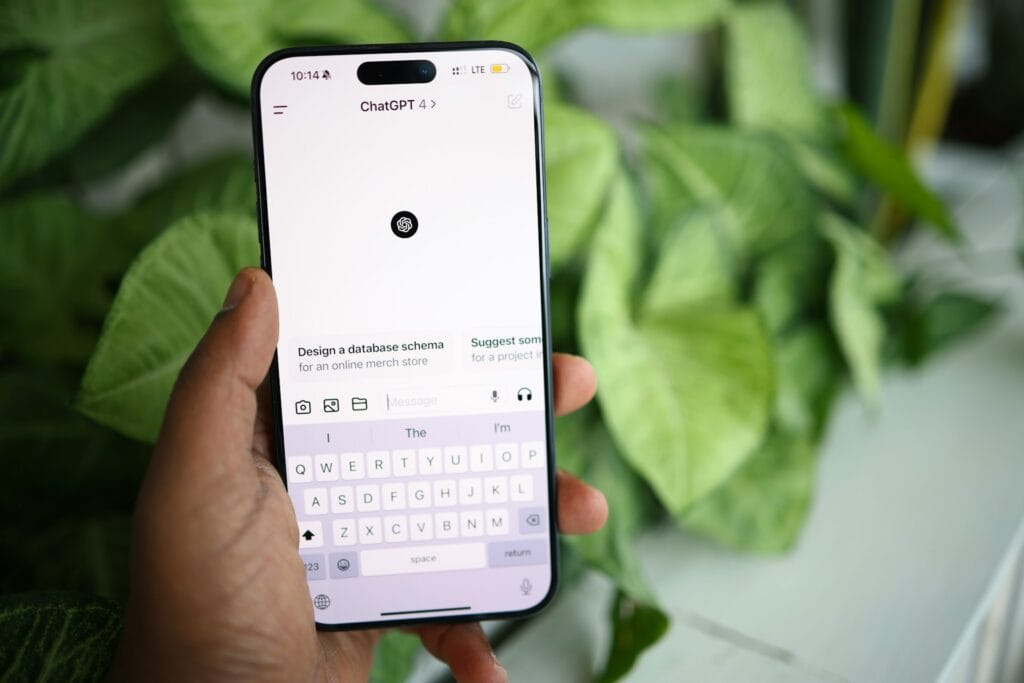
Zainab Iftikhar, the PhD candidate at Brown who led the research, noted that users prompt the models with instructions like “act as a cognitive behavioural therapist” or “use principles of dialectical behaviour therapy to help me manage my emotions.”
The model does not perform those techniques as a trained human would.
It generates responses that align with the concepts, based on learned patterns. It looks like therapy. It uses the vocabulary of therapy. It moves through the structure of therapy.
It is not therapy. The study is precise about this. And the gap between the two is where the harm lives.
Why This Matters at Scale
Anxiety disorders affect roughly 30% of US adults at some point in their lives.
Therapy waitlists in the UK run to months. In many parts of the world, a licensed therapist is simply not accessible, financially or geographically.
ChatGPT as therapist fills that gap for a lot of people. Not because it was designed to. Because it is there, it is free, and it does not have a waiting list.
The Brown University study does not say this is categorically wrong.
What it says is that the current systems routinely fail the ethical standards that exist to protect vulnerable people. And there is no licensing board for a chatbot. No liability framework. No recourse.
A human therapist who mishandled a suicide crisis would face consequences. The chatbot gets a product update.
What the Study Calls For
The researchers are not calling for a ban.
They are calling for legal standards, educational guidelines, and oversight frameworks built specifically for AI in mental health contexts.
That is a different ask. It accepts that people will continue using ChatGPT as therapist because the need is real and the access problem is real.
What it refuses to accept is that the tools can operate without accountability.
Three licensed psychologists sat down and read transcripts of AI therapy sessions. They applied the same ethical framework they would apply to a human colleague.
The AI failed. Repeatedly. Across multiple models. Across multiple categories.
The study was published in the Proceedings of the AAAI/ACM Conference on AI, Ethics, and Society.
It is not a newspaper opinion piece. It is a practitioner-informed framework built by people who actually train therapists.
What Remains
There is a reason people open ChatGPT at 2am and type things they have not said to anyone.
The need is legitimate. The gap it fills is real. Nobody should pretend otherwise.
But deceptive empathy is not care.
A chatbot that says “I see you” without seeing anything is not a therapist with limitations. It is a mirror that speaks. And for someone in genuine distress, the difference between the two is not academic.
The study named 15 ways the system fails. The harder question is who is responsible for closing them.
That question does not yet have an answer.
Read Next: They Were Always Going to Leave. That Was the Point.
Tagore’s The Postmaster: a story about being left behind
What Is Dharma? What the Mahabharata Knew About Losing Everything